
Most of insuring an electric car works exactly like insuring any other car. You still need at least third-party cover, you still compare quotes, and you still get asked where you park at night.
A few things are different, though: what a repair costs, what happens if the battery gets damaged, and what's covered while you're plugged in. Here's what to check before you renew, plus a worked example of how insurance fits into what an EV actually costs to run.
Why EV quotes can come in higher
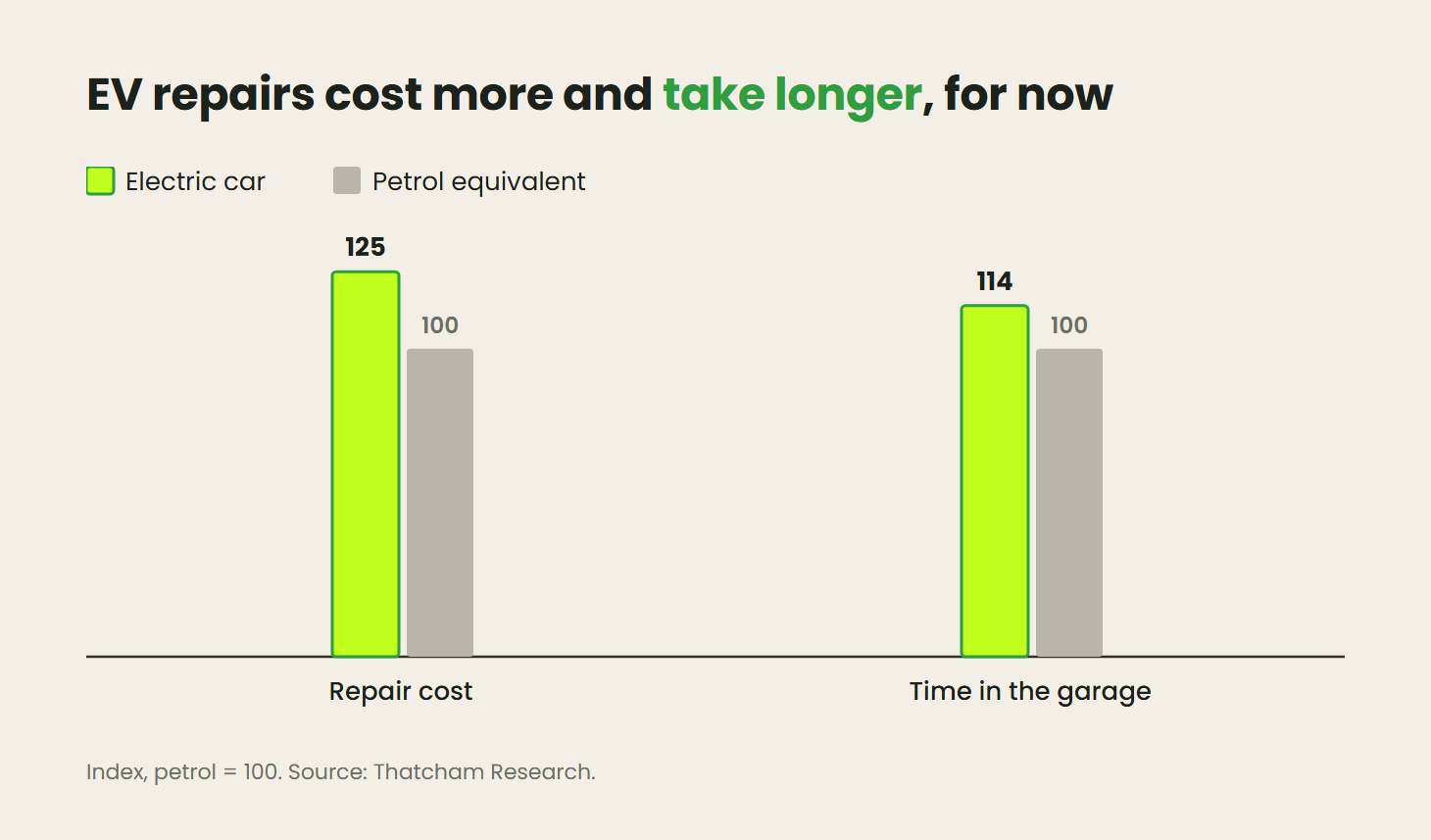
Insurers price on what claims cost them. Thatcham Research, whose work feeds into the insurance group ratings, found that EV repairs cost around 25% more than petrol equivalents and take about 14% longer.
The main reasons:
- The battery. It can be 30% to 50% of a car's value, so even minor damage near the pack means specialist checks.
- Fewer qualified technicians. Only a minority of UK technicians are trained to work on high-voltage systems, so repairs queue up.
- Safety rules. A damaged EV battery may need to be isolated before work starts, which ties up space and adds days.
- Newer cars. Lots of EVs on the road are recent, higher-value models, and newer cars cost more to fix.
The good news is that this is improving. Thatcham says EV repair costs have already fallen by about 10.7% as garages get more experience, and more insurers now have EV-specific policies.
The battery: ask this first
Before you compare quotes, check whether you own the battery. Some older EVs, the early Renault Zoe for example, were sold with the battery on a separate monthly lease. If yours is one of them, the battery belongs to the leasing company, so tell your insurer and check who covers what.
If you own it, the battery's part of the car's value. Ask your insurer:
- Is accidental damage to the battery covered?
- Is there a separate or higher excess for battery claims?
- Is the battery covered if it's damaged while charging?
- Does the policy pay out on market value or agreed value?
Battery wear from age is a different thing. That's a warranty matter, not an insurance one, and most manufacturers cover the battery for eight years. Real-world batteries also last a lot longer than people think, which is exactly what this video gets into:
Buying used? Our used EV battery health check shows you what to look for before you buy, and before you insure.
Charging cables and kit
A charging cable isn't cheap to replace, and a cable left on a public charger is an easy target. Check which policy covers what:
- Your car insurance should cover the portable cable that lives in the boot, including while you're plugged in at a public charger.
- Your home insurance usually covers the wall charger, because it's fixed to your house.
A tethered home charger keeps its cable attached to the unit on the wall, so there's no loose lead in the boot to go missing. For the public cable, a cable lock and a tidy storage bag help.
Tell your home insurer about your charger
A home charger isn't a modification to your car, so your car insurer usually doesn't need to know about it. Your home insurer is different. A charger is a new fixed electrical installation, so let them know and keep the paperwork safe.
The paperwork that matters is your electrical installation certificate, which shows the work meets the wiring regulations (BS 7671). A proper installer gives you one when the job's done, and it's the first thing an insurer will ask for if you ever claim.
If your cable crosses a pavement, check that your home insurance includes public liability cover, in case someone trips. Our guide to pavement charging channels explains how those work.
Where the car sleeps matters
Insurers ask where the car's kept overnight, and a driveway or garage usually prices better than the street. If getting a home charger means your car lives on the drive instead of the road, make sure your quotes say so.
A worked example
Insurance is one line in your running costs, so look at the whole picture. Say your EV quote comes back £150 a year higher than the petrol car you're replacing. That's an example figure; yours will vary.
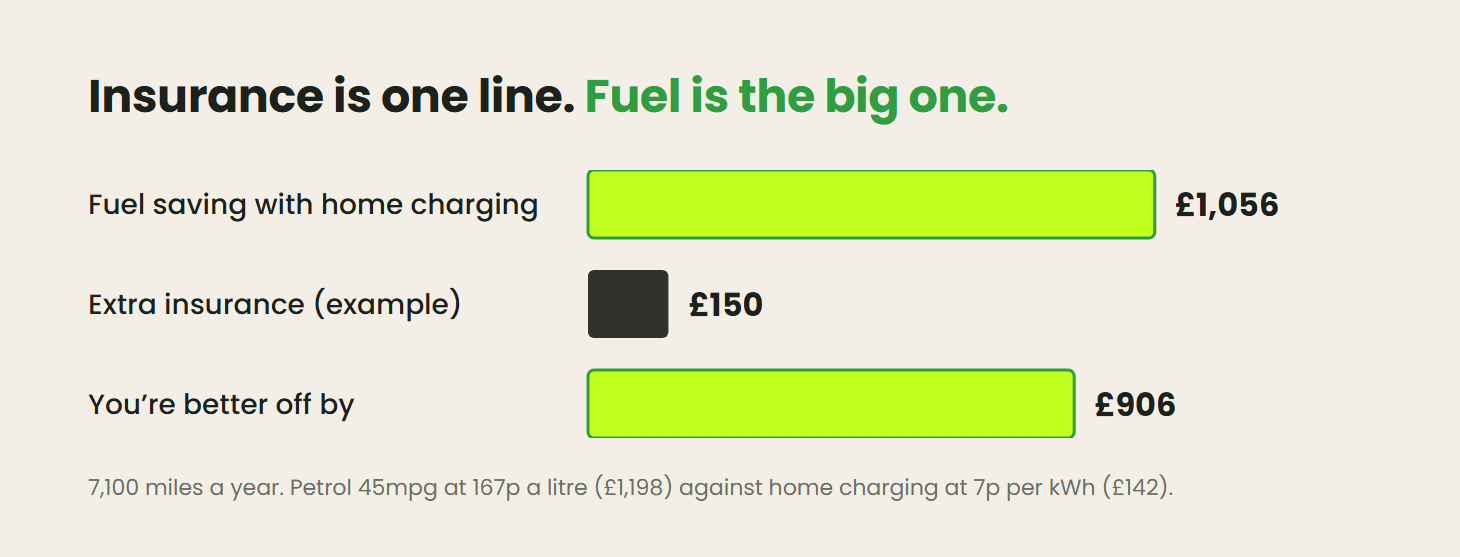
- Petrol: 7,100 miles at 45mpg and 167p a litre is about £1,198 a year in fuel.
- EV charged at home: the same miles on a 7p overnight tariff is about £142.
- The difference: about £1,056 a year in your favour. Take off the extra £150 for insurance and you're still about £906 ahead, before you count cheaper servicing.
The catch is that this depends on charging at home. Do all your charging at public rapid chargers and that advantage disappears, which is why we always say sort your charging first. Our breakdown of EV servicing costs fills in the rest of the picture.
Your EV insurance checklist
- Get at least three to five quotes, including from specialist EV insurers.
- Confirm who owns the battery and how it's covered.
- Check your charging cable is covered, at home and in public.
- Ask your breakdown cover whether running out of charge is included, and whether they'll take you to a charger.
- Tell your home insurer about your charger and keep the certificate.
- Be accurate about where the car's kept overnight.
- If you don't drive much, ask about a telematics or low-mileage policy.
Questions we get asked
Do I need special insurance for an electric car?
No. Most mainstream insurers cover EVs. Specialist EV policies can add extras like battery and cable cover, so they're worth including when you compare.
Do I need to tell my car insurer about my home charger?
Usually not, because it isn't a change to the car. Tell your home insurer instead, and keep the electrical installation certificate.
Is battery wear covered by insurance?
No. Insurance covers damage, like a crash or a flood. Gradual wear is a warranty matter, and most manufacturers cover the battery for eight years.
Getting a charger fitted? We'll give you the certificate your insurer wants to see. Find out about our home EV charger installation, see which charger suits you, or get in touch.


