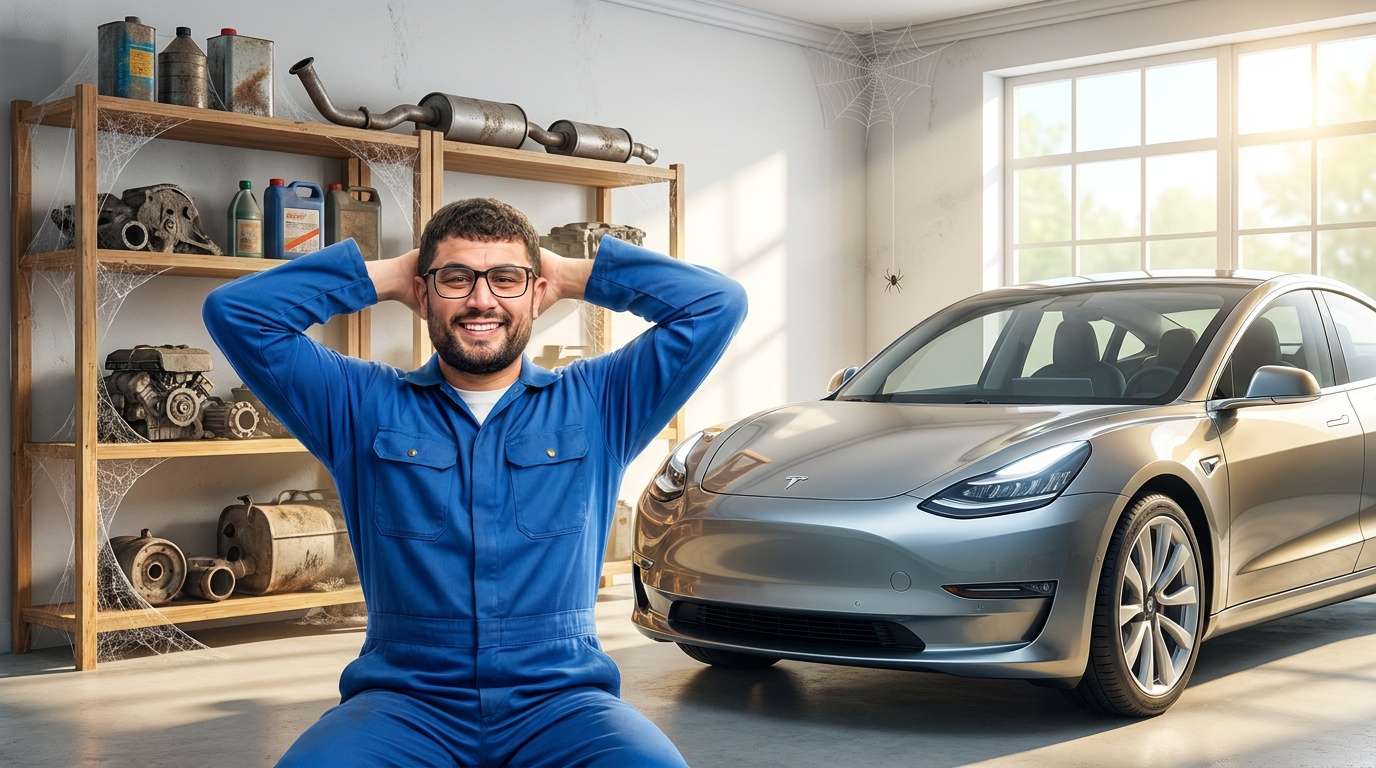

No Oil, No Exhaust, No Cambelt
One of the most underrated benefits of owning an electric car is what you do not have to pay for. Skip the oil change. Forget the exhaust repair. Wave goodbye to cambelt replacements, spark plugs and fuel filter swaps.
An electric motor has around 20 moving parts. A petrol engine has closer to 2,000. Fewer moving parts means fewer things to go wrong and far fewer items on the annual service checklist.
What an EV Service Actually Covers
Your EV will still need regular servicing, but the scope is quite different from a petrol or diesel car. A typical annual EV service covers:
- Brake fluid check and replacement (usually every two years)
- Tyre inspection and rotation
- Cabin air filter replacement
- Coolant level check for the battery thermal management system
- Software and firmware updates
- Wiper blades and washer fluid
- Visual inspection of the high-voltage battery cabling and connections
That is it. No oil drain, no timing chain tensioner, no catalytic converter. A standard EV service at a franchised dealer typically costs between £100 and £250 per year, compared to £200 to £300 for an equivalent petrol car, according to the Electric Car Scheme.
The Hidden Saving: Brakes
Regenerative braking is one of the less-discussed financial wins of EV ownership. Every time you lift off the accelerator, the motor acts as a generator, recovering kinetic energy back into the battery and slowing the car in the process.
This means your physical brake pads and discs do far less work than on a petrol car. Many EV owners replace their brake pads every 70,000 to 100,000 miles rather than the 25,000 to 40,000 miles typical for a combustion vehicle. Over the life of a car, that is a significant sum saved.
Where Costs Can Creep Up: Tyres
Electric cars are typically heavier than their petrol equivalents because of the battery pack. That extra weight, combined with the instant torque that makes EVs so satisfying to drive, means tyres can wear a little faster, particularly on the rear axle.
Check tyre pressures regularly and rotate tyres front-to-back every 6,000 to 8,000 miles. Some EVs also require specialist EV-rated tyres, which carry a small price premium over standard rubber. Budget for this; good tyres are never the place to cut corners.
What to Budget: A Simple Summary
- Annual service: £100 to £250 (versus £200 to £300 for petrol)
- Brake pads: rarely needed before 70,000 miles with regenerative braking
- Tyres: similar to or slightly higher than a petrol car; rotate them regularly
- Battery warranty: most manufacturers cover the battery for 8 years or 100,000 miles; check your specific car's terms
Research from ONEEV suggests that over a five-year ownership period, the difference in scheduled service costs alone can amount to £1,000 to £1,500 in favour of the EV. Add lower fuel costs and the financial case gets considerably stronger.
One More Thing: Your Home Charger
The easiest way to maximise the savings of EV ownership is to charge at home overnight. A dedicated home wall charger is faster, safer and cheaper per kWh than any public network alternative. If you have not yet installed a home charger, or you are weighing up which charger suits your car and home setup, we can help you find the right answer quickly.
Cut Your Running Costs


