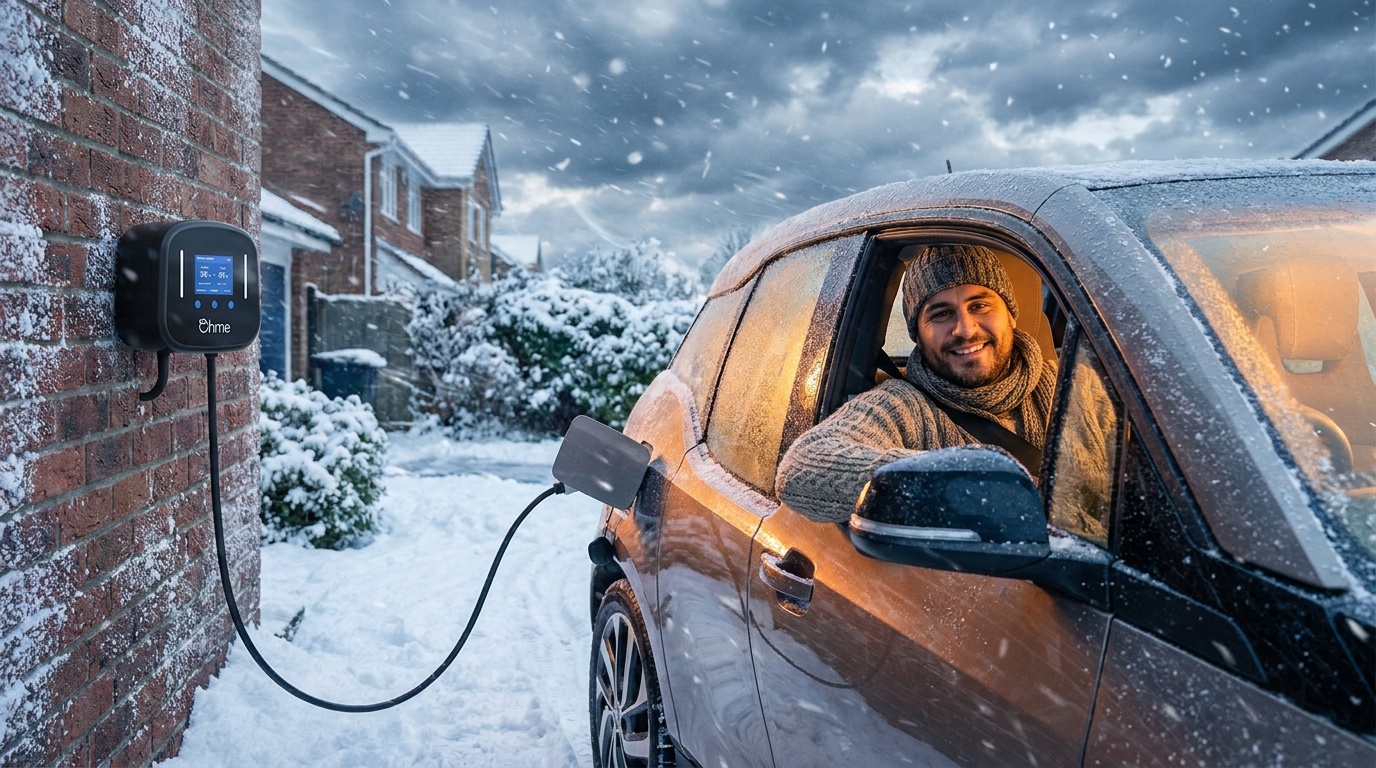

Why Cold Weather and Batteries Are Not Best Friends
As the days shorten and temperatures drop, EV owners across the UK notice something: the range estimate ticks down even before they leave the driveway. This is not a fault, and it is not a sign of early battery decline. It is chemistry.
Lithium-ion batteries work by moving ions between electrodes through an electrolyte. When temperatures fall below around 7°C, that electrolyte thickens, slowing ion movement and temporarily reducing the energy the battery can deliver. The range drop is real, but it is manageable once you know what to expect.
How Much Range Do You Actually Lose?
In typical UK autumn and winter conditions, most EVs lose between 15% and 30% of their rated range. In near-freezing temperatures with heavy cabin heating in use, some older models can see reductions of 35% to 40%. Modern cars with heat pump systems, such as the Hyundai Ioniq 5, Tesla Model Y Long Range and BMW iX, handle this much better, typically losing just 10% to 15% in cold weather.
As a practical reference: if your car shows a summer range of 250 miles, expect 175 to 210 miles on a cold January morning. Plan accordingly and you will be comfortable every time.
The Single Best Trick: Preheat While Plugged In
If there is one habit that transforms winter EV ownership, it is this: preheat your cabin and battery while the car is still connected to your home charger.
When you preheat from the mains rather than the battery, the energy to warm the car comes from the grid, not your range. You start the journey with a warm cabin and a warm battery, at no cost to your available miles. Most modern EVs allow you to schedule a departure time through their companion app or the infotainment system, so preheating happens automatically while you are still having breakfast.
- Set a departure time in your car's app the night before.
- Leave the car plugged in until the moment you leave.
- Use seat heaters in preference to cabin blowers; they use a fraction of the energy.
- Set cabin temperature a little lower and use the heated steering wheel to take the edge off.
Smart Charging Habits for Winter
A few small adjustments to your charging routine will keep your battery performing well through the colder months:
- Charge to 80% for everyday use, but charge to 100% the evening before a long journey so the battery is full and the management system keeps it warm overnight.
- Avoid dropping below 20% in very cold weather. A depleted battery in the cold takes longer to accept a charge and performs less predictably.
- Overnight home charging is gentler on a cold battery than rapid DC charging in sub-zero temperatures. Your car's battery management system handles pre-conditioning automatically on most modern EVs, but slow overnight charging is always kinder.
- Keep tyre pressures at the manufacturer's recommended level. Cold air causes pressures to drop by around 1 PSI for every 10°C fall in temperature, increasing rolling resistance and reducing range.
Does Cold Weather Damage the Battery Long-Term?
This is one of the most common questions we hear. The honest answer: no, not with sensible habits. The range reduction you see in winter is temporary. Once temperatures rise, your normal range returns. Repeatedly rapid-charging a very cold and very depleted battery is the one habit worth avoiding, as it can accelerate degradation slightly over time. Overnight home charging sidesteps that entirely.
According to DriveElectric and the Electric Car Scheme, EVs that are regularly home-charged and preconditioned perform significantly better in winter than those relying primarily on public rapid charging.
Your Home Charger Is Your Winter Superpower
A dedicated home wall charger is the single most useful tool for stress-free winter EV ownership. Your car is always warm, always charged and always ready. If you have not yet got one installed, or you are wondering which charger suits your car and home setup, our team is here to help all year round.
Get Winter-Ready


