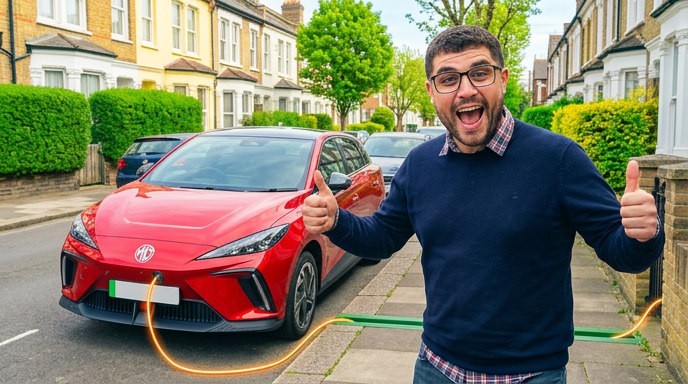

For years, home charging felt like something only people with a driveway could have. If you park on the street outside your house, you were quietly left out. That has finally changed.
From April 2026 there is a dedicated government grant for households with no off-street parking, and the technology to charge safely from your own home has caught up. Here is what you need to know.
What is cross-pavement charging?
The problem with on-street charging was never the charger. It was the cable. Trailing a lead across a public footpath is a trip hazard, and most councils will not allow it.
A cross-pavement channel solves that. It is a slim, sunken gully fitted flush into the pavement, running from your house wall to the kerb. Your charging cable drops into the channel while the car charges, sits below the surface so nobody can trip on it, and lifts back out when you are done. The pavement stays clear and level.
The new 2026 grant, in plain terms
From 1 April 2026, on-street households can claim a grant towards both the charger and the channel:
- It covers 75% of the cost, up to £500 per socket
- You must fit a permanent cross-pavement solution, not a temporary cable mat or cover
- You must not have private, exclusive off-street parking such as a driveway or garage
- Funding is confirmed until 31 March 2027
In other words, the same support that driveway owners have had for years is now open to people who park on the road.
Your council has a say
Because the channel sits in a public pavement, your local authority has to approve it. The good news is that councils are moving quickly. More than 40% of UK local authorities expect to offer cross-pavement charging by the end of 2026, with dozens already live or running trials.
Costs for the council side vary a lot. Some authorities install the channel for free, others charge for the permit and groundworks, so it is worth checking your local position early.
Is it right for you?
Cross-pavement charging tends to suit you if:
- You park on the street directly outside, or very close to, your home
- You own an EV or are about to take delivery of one
- You want home charging prices (often a fraction of public rates) without a driveway
How we can help
At Plug In Stations we handle the full picture: confirming your eligibility, talking to your council where needed, fitting the channel and the charger, and applying the grant directly to your invoice so you never chase the paperwork.
Ready to look into it?


