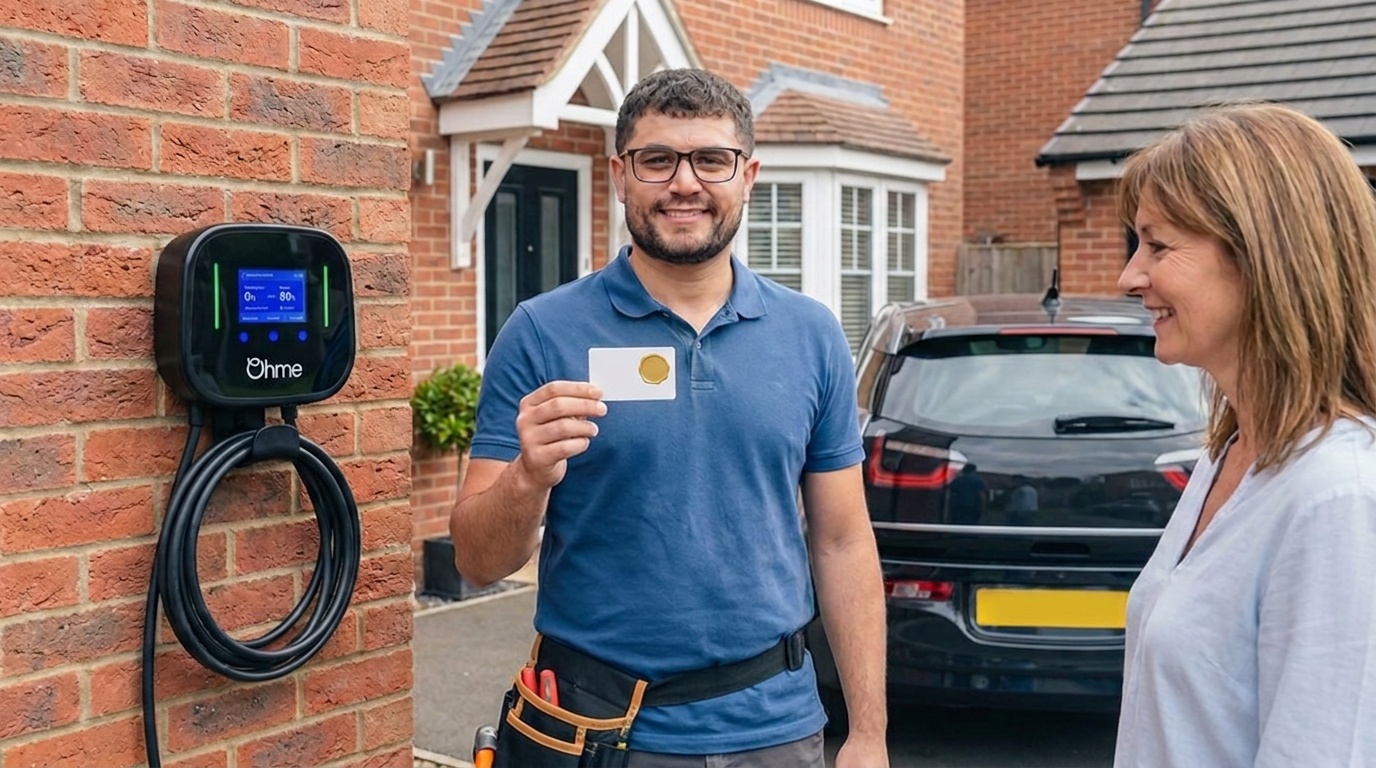

On 1 October 2026 the rules changed for anyone who fits EV chargers, and most people getting a charger fitted have no idea. Knowing the rule is one thing. Knowing how to check it, and what a proper install looks like, is what actually protects you. Here's both.
The change in one paragraph
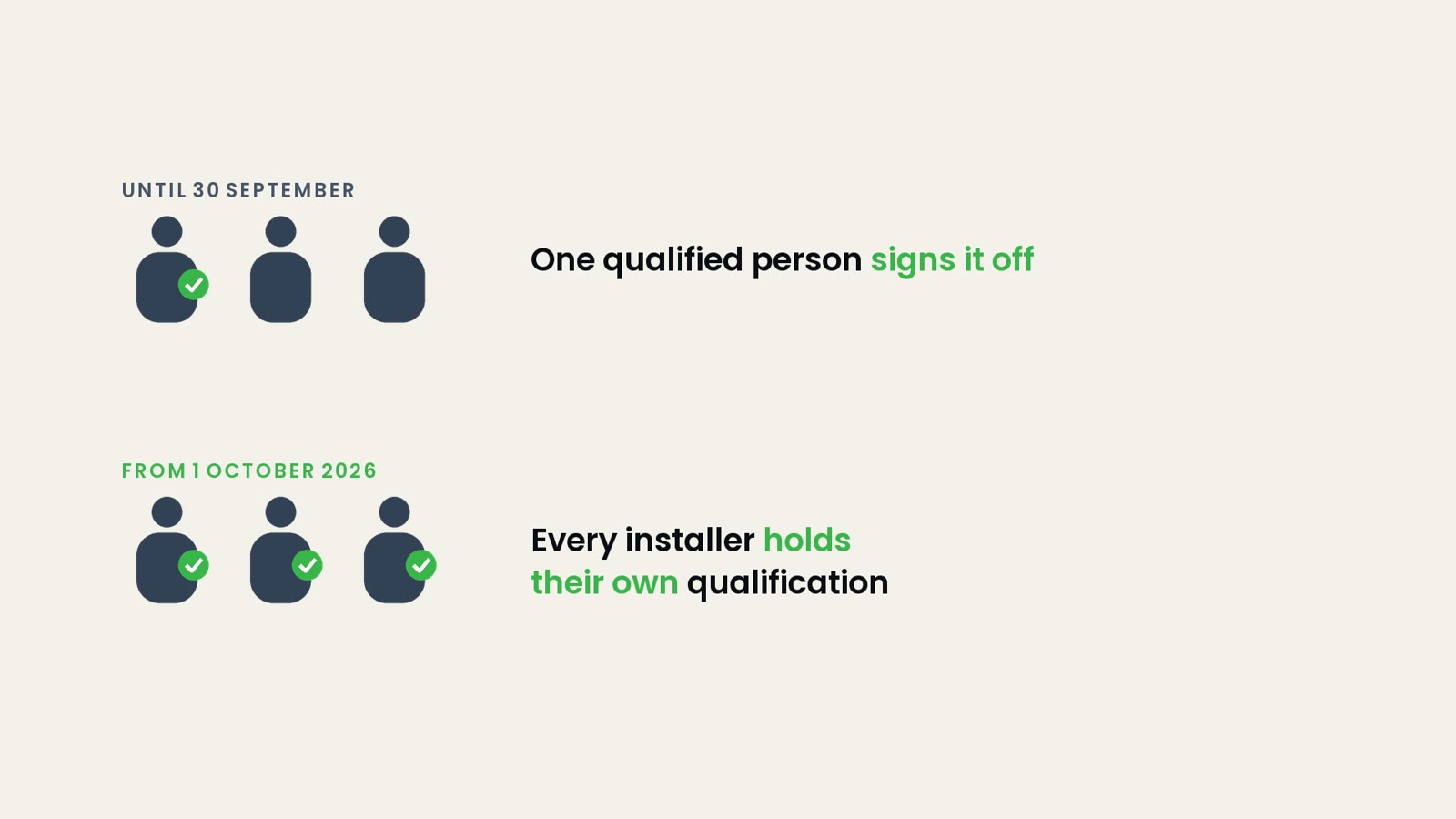
The standard that NICEIC, NAPIT and the other competent person schemes use to assess electricians now says every person who physically fits an EV charger needs their own recognised Level 3 EV charging qualification. Before, one qualified person could sign off work done by people who weren't. That's gone, and there's no grandfather route for anyone who's been fitting chargers on manufacturer training alone. We've covered the background in your installer should be qualified, now it is law.
Why it matters
An EV charger isn't a plug socket. It pulls a lot of power for hours at a time, often overnight while you're asleep. We're regularly called out to put right installs that someone else didn't do properly. So this change is a good thing. The cheap, in-and-out, whoever's-free-today kind of job should start to disappear.

How to check an installer yourself
You don't have to take anyone's word for it. It takes about five minutes:
- Look them up on the scheme register. NICEIC and NAPIT both have free online searches. If a company says it's registered, it should be on there under the same name.
- Check the OZEV list if you're claiming a grant. Only authorised installers can claim it, and the gov.uk list of chargepoint installers lets you check.
- Ask about the person, not the company. Who's actually coming to fit it, and do they hold a Level 3 EV charging qualification? A good installer will happily show you.
- Ask what you'll get when it's done. You should be told up front about the certificate, the building regulations notification and the warranty.
What a proper install includes
A good installer does a lot more than put a box on the wall:
- A survey first, in person or from photos and a video call, so the quote's based on your actual house.
- A load check of your main fuse and what the house already uses, so the charger doesn't overload your supply. A smart charger can turn itself down when the house is busy.
- Earthing done properly. Both chargers we fit, the Ohme Home Pro and the Ohme ePod, have built-in protection that means you usually don't need an earth rod in the garden. An installer who doesn't know the charger may add one you don't need, or miss a check you do.
- The right protection in your fuse box, usually a dedicated circuit for the charger.
- A tidy cable route, clipped and protected, not trailing along the wall.
- Telling your network operator. The company that runs your local power network needs to know about a charger, and your installer should do it for you.
- Setting it up with you. App connected, tariff set, and you shown how it works.
The paperwork you should end up with
- An Electrical Installation Certificate. You'll want it if you ever sell the house.
- A building regulations notification, done through the installer's competent person scheme.
- Warranty details for the charger and for the installation.
- Grant paperwork, if you claimed one.
Red flags in a quote
- A price with no survey, no photos and no questions about your fuse box.
- No mention of your network operator.
- Vague answers about who'll actually be fitting it.
- A big deposit up front, or pressure to decide today.
- They can't tell you which scheme they're registered with.
- An offer to fit before your grant's confirmed. The grant can't be backdated, so that could cost you up to £500.

How we measure up
- Every one of our installers is EV qualified.
- We're NICEIC and NAPIT registered.
- We're OZEV approved for the grants.
- You get a certificate and a five-year installation warranty on every job.
If anyone gets cagey answering any of this, that tells you everything.
Questions we get asked
My charger was fitted before October. Is it still OK?
The change is about who fits chargers from now on. It doesn't make existing installs illegal. If you've got any doubts about yours, like scorch marks, a charger that keeps tripping or one that keeps dropping out, get it looked at by a qualified installer.
Does this change the grant?
No. The grants for flat owners, renters, landlords and on-street households are still there until 31 March 2027, and they still have to go through an OZEV-authorised installer.
Want to know what you're paying for? Here's what goes into an EV charger install, line by line.
Want a quote from people who'll answer all of this? Get a quote here, or read more about our home EV charger installation.


