
The Rule Most Buyers Don't Know About
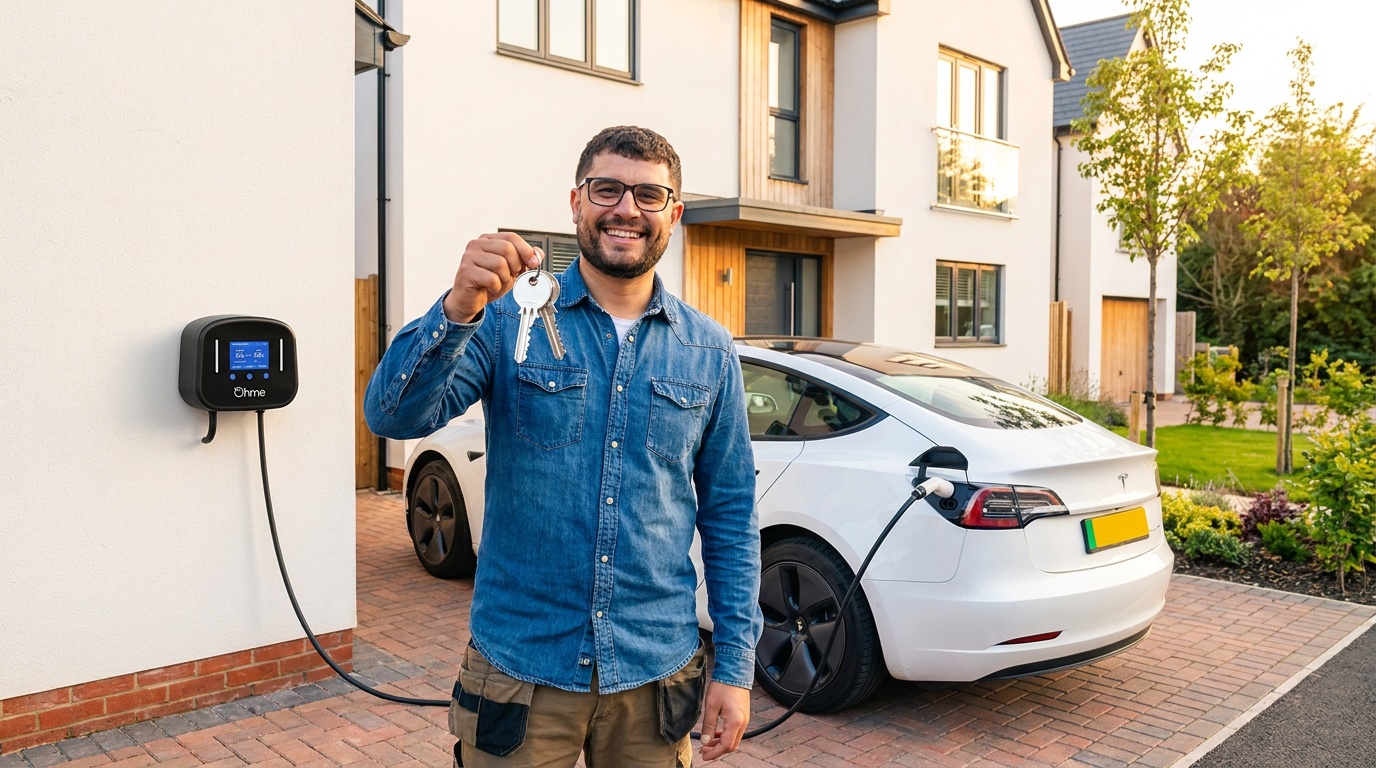
Since June 2022, Part S of the Building Regulations has required new homes in England with their own parking to come with an EV chargepoint. For most new houses with a driveway or allocated space, that means a 7kW smart charger should be on the wall when you get the keys.
There are exceptions. If connecting chargers would cost the developer more than £3,600 per home, they can fit fewer chargepoints and install cable routes (ducting ready for a future charger) instead. Covered car parks can also end up with cable routes rather than working chargers.
So the question for any new build buyer isn't just "is there a charger?" It's "what exactly have I got, and does it work?"
What You Might Find
- A working smart chargepoint, commissioned and ready to use.
- A charger fitted but never commissioned or set up.
- A cable route only: ducting to your space, with no cable pulled through and no charger fitted.
- Nothing at all, where the home falls under an exemption.
Check It Before You Move In
The best time to sort your charger is before completion, or in the first few weeks after. Here's why:
- Snags are easier to raise while the developer is still on site.
- A missing or faulty chargepoint is the developer's problem to fix before you've lived there for months.
- Cable runs are cheaper and tidier before flooring, decorating and landscaping are finished.
- You avoid paying a premium to retrofit something that should have been done from the start.
At your pre-completion inspection, ask the developer for the chargepoint's commissioning paperwork and model details, and check it actually charges a car.
Got a Cable Route but No Charger?
A cable route is genuinely useful. It cuts the cost and disruption of an install. But to charge your car you'll still need:
- A dedicated circuit pulled through the ducting
- A charger mounted at your parking space
- Correct earthing and protection at your consumer unit
- A qualified installer to commission and certify the work
That's where we come in. Our home EV charger installation team can use the route that's already there to get you charging quickly.
Does the Grant Apply?
If your new build is a flat, or you're renting it, you may be able to claim the OZEV EV chargepoint grant of up to £500 towards a charger. New build houses with their own driveway don't qualify. Check the latest grant details on GOV.UK.
Choosing a Charger for a New Build
New builds usually have modern consumer units, which makes them a great fit for smart chargers that schedule charging overnight and work with cheap EV tariffs. Read our home charger guide to find the best fit for your car and tariff.
For the full detail on Part S, GOV.UK's Approved Document S has the official guidance.
Your Charger Window Is Open


