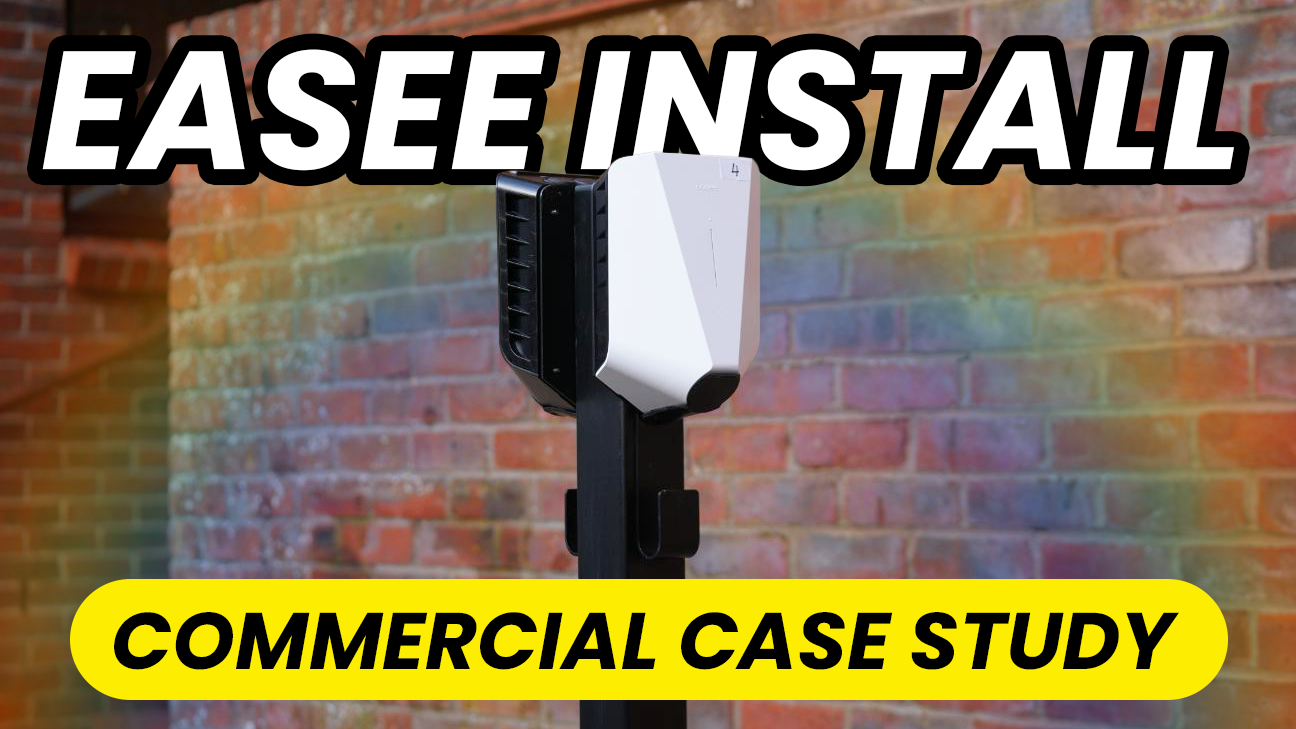

Commercial EV Charging Installation Guide: The Rainbow Productions Case Study
Introduction: Future-Proofing Your Commercial Property

In today's rapidly evolving EV landscape, forward-thinking businesses are moving beyond simply accommodating electric vehicles—they're actively enabling the transition. A practical example of this strategic approach comes from the recent installation of four Easee chargers at Rainbow Productions, a London-based production studio.
This case study demonstrates how commercial properties can simultaneously support staff vehicle charging and generate revenue through public charging services. Whether you're a business owner, facility manager, or considering EV infrastructure investment, this real-world installation breakdown reveals the technical possibilities and business benefits of modern commercial charging systems.
The Project Overview: Rainbow Productions Installation
What Was Installed
Rainbow Productions received a complete four-charger installation comprising:
- Two Easee chargers configured for private use by Rainbow Productions staff and vehicles
- Two Easee chargers designated for public use with integrated payment systems
- Smart load management infrastructure to ensure safe power distribution across all four units
The chargers were strategically colour-coded for easy identification: red and blue for private staff charging, black and white for public access.
Why This Matters
The project illustrates two key motivations driving commercial charging investment:
Staff Attraction and Retention: Employees with electric vehicles can now charge during work hours, eliminating charging anxiety during the workday and improving workplace amenities in a competitive talent market.
Revenue Generation and Brand Value: By offering public charging through a professional payment system, the business generates income while positioning itself as environmentally progressive—valuable brand messaging in an increasingly sustainability-conscious market.
Technical Architecture: Daisy Chaining and Load Management
The Power of Daisy Chaining
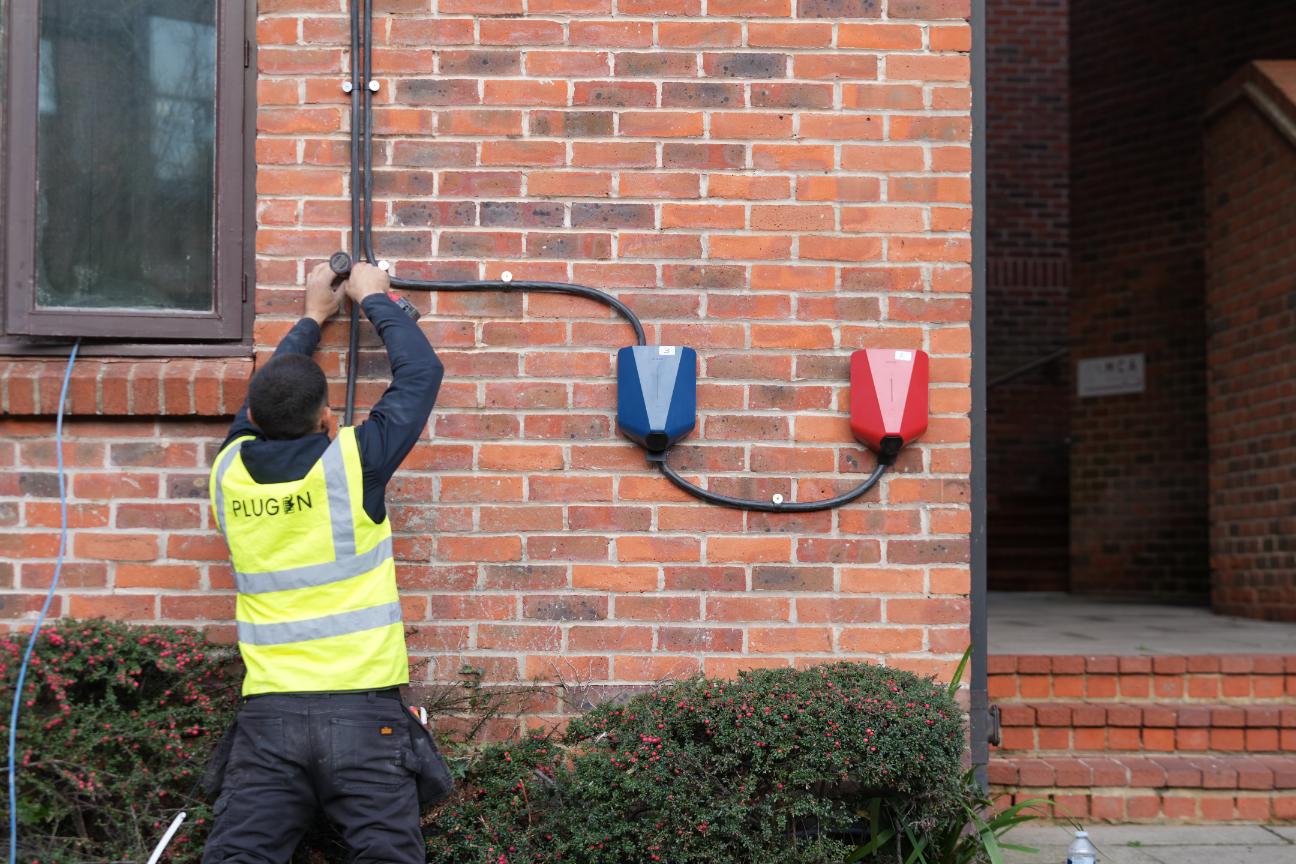
One of the most significant advantages of Easee chargers is their ability to daisy chain—connecting multiple units to a single electrical circuit without requiring individual power feeds.
This capability fundamentally changes the economics of multi-unit installations:
Traditional Approach: Each charger requires its own dedicated circuit, substantially increasing installation costs through additional cabling, conduit work, distribution board upgrades, and potential grid connection improvements.
Daisy Chaining with Easee: Multiple Easee chargers can share a single main circuit, with sophisticated load-balancing technology managing power distribution intelligently.
According to Easee's design specifications, you can technically connect up to 99 chargers on a single circuit—though practical commercial installations typically deploy 2-4 units per circuit based on location needs and anticipated simultaneous usage.
Understanding Load Balancing with CT Clamps
The critical technology enabling safe daisy chaining is load balancing, powered by Current Transformer (CT) clamps.
How CT Clamps Work:
A CT clamp is a non-invasive electrical monitoring device that clamps around the main incoming electrical supply (or relevant circuit conductor). It continuously monitors the electrical load flowing through your property in real time.
The Load Balancing Function:
When multiple chargers share a circuit, the CT clamp acts as an intelligent traffic controller:
- Real-time monitoring: The clamp reads total household/facility electrical demand—from HVAC systems, office equipment, kitchen facilities, and other operational loads.
- Dynamic power allocation: When you set a maximum available power threshold (for example, 32 amps across all chargers), the system ensures total demand never exceeds your property's main fuse capacity.
- Automatic throttling: If simultaneous charging demands would push you over the limit, the system intelligently reduces charging power to individual chargers.
Practical Example:
Rainbow Productions has a 100-amp main fuse. During installation, the team configured the system to allocate 80 amps maximum for charging (protecting the remaining 20 amps for normal operations). When both staff chargers are in use, each might receive 18 amps. When public chargers activate simultaneously, the system distributes power across all four units, with each receiving approximately 5-7 amps while maintaining safety margins.
The Installation Process
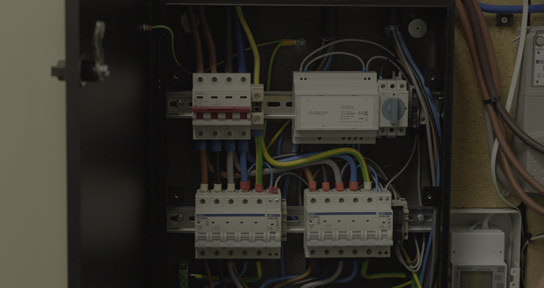
The installation workflow at Rainbow Productions demonstrates professional commercial charging setup:
Stage One: Site Survey and Planning
- The team reviewed the property layout and identified optimal charger locations
- Discussed cable routing to minimise disruption—routing cables through ceilings wherever possible
- Determined where the main load management device would be positioned
Stage Two: Infrastructure Preparation
- Lifted ceiling tiles to create cable pathways
- Drilled access holes where necessary to route cables through structural elements
- Mounted fire-rated cable clips to secure cables safely within ceilings and along walls
Stage Three: Power Distribution Setup
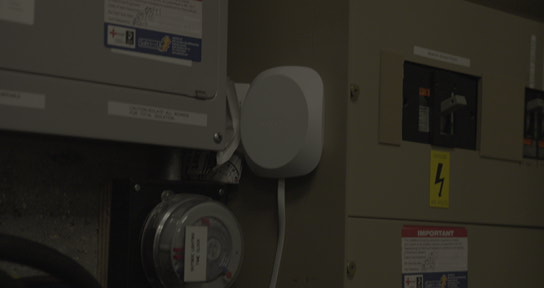
The installation included a Matty device—essentially a fuse board and distribution system that houses the power architecture for all four chargers. The Matty device connects to an equalizer (another name for the load balancing system powered by the CT clamp).
This configuration ensures:
- All chargers receive coordinated power from a single source
- Load balancing prevents any single charger from exceeding safe power limits
- Circuit protection automatically engages if system demands spike unexpectedly
Stage Four: Cable and Charger Installation
- Cables were run down exterior walls using proper securing methods
- Charger mounting brackets were securely installed
- Final connections completed and tested
Why This Architecture Matters
Traditional commercial installations required either:
- Multiple separate circuits, dramatically increasing installation costs and complexity
- Switchover devices limiting simultaneous charging to one charger at a time, reducing functionality
- Expensive grid upgrades to increase the property's total available power
Daisy chaining with intelligent load balancing removes these constraints. The system can safely support multiple simultaneous charges at reduced power, or prioritise one or two vehicles for faster charging when others are idle—all without exceeding electrical limits.
Payment Systems: Monetising Public Charging
The Montyx Integration
For the two public chargers, Rainbow Productions integrated Montyx (also known as Monta)—a comprehensive EV charging platform.
How Public Charging Works:
When the public chargers are activated, users simply scan a QR code on the charger unit. This QR code directs them to the Monta app where they can:
- Select their payment method (credit card, Apple Pay, Google Pay, or other digital wallets)
- Choose their desired charging duration
- Initiate the charging session
The payment is processed instantly, and the charger activates.
Revenue Generation Features
The Monta platform provides businesses with sophisticated charging management tools:
Dynamic Pricing: Operators can adjust pricing based on demand, time of day, or actual electricity costs being paid. For example, charging might cost £0.30/kWh during peak hours but £0.15/kWh during off-peak periods.
Smart Queue Management: When multiple users arrive simultaneously, Monta's Smart Queue feature automatically allocates available chargers and notifies users when it's their turn.
Load Balancing: The platform automatically distributes available power across active charging sessions, ensuring efficient utilization.
Invoice and Payment Options: Businesses receive detailed transaction reporting and can customise payment terms, including support for team wallets and corporate reimbursement schemes.
Business Value
For Rainbow Productions, the Montyx integration transforms the charging installation from a cost center into a potential revenue stream while providing genuine public utility. Local EV drivers needing a charge point gain reliable infrastructure, while the business earns incremental revenue to offset operational costs.
Commercial Considerations for Your Business
Permitting and Compliance
Before undertaking any commercial EV charger installation, verify local permitting requirements:
- Building Control approval may be required for commercial electrical installations
- All work must comply with BS 7671 wiring regulations (UK electrical safety standards)
- The IET Code of Practice for EV Charging Equipment Installation should be followed
- Planning permission requirements vary by location—consult local authority before proceeding
Timeline and Budget Expectations
Commercial charging installations typically span 1-4 weeks depending on project complexity and power requirements:
- Week 1: Site assessment, power capacity evaluation, system design
- Week 2-3: Electrical infrastructure preparation, cable routing, charger mounting
- Week 3-4: Final connections, testing, safety certification, commissioning
Cost varies substantially based on:
- Number of chargers and required power capacity
- Cable routing complexity (ground conduit vs. aerial conduit vs. ceiling routing)
- Existing electrical infrastructure (may require panel upgrades, new distribution boards, etc.)
- Site accessibility and labour requirements
For installations similar to Rainbow Productions (four chargers with load balancing), budgets typically range from £4,000-£8,000 including equipment and professional installation—though sites requiring grid upgrades or extensive civil works can cost significantly more.
Scalability and Future-Proofing
One of the primary advantages of the Easee daisy-chain architecture is scalability:
Installing four chargers today doesn't constrain future expansion. If business needs evolve and additional charging capacity becomes necessary, additional Easee units can be added to existing circuits (up to technical limits) with minimal additional infrastructure work.
The load balancing system automatically incorporates new chargers into the power distribution algorithm.
Choosing the Right Charger System
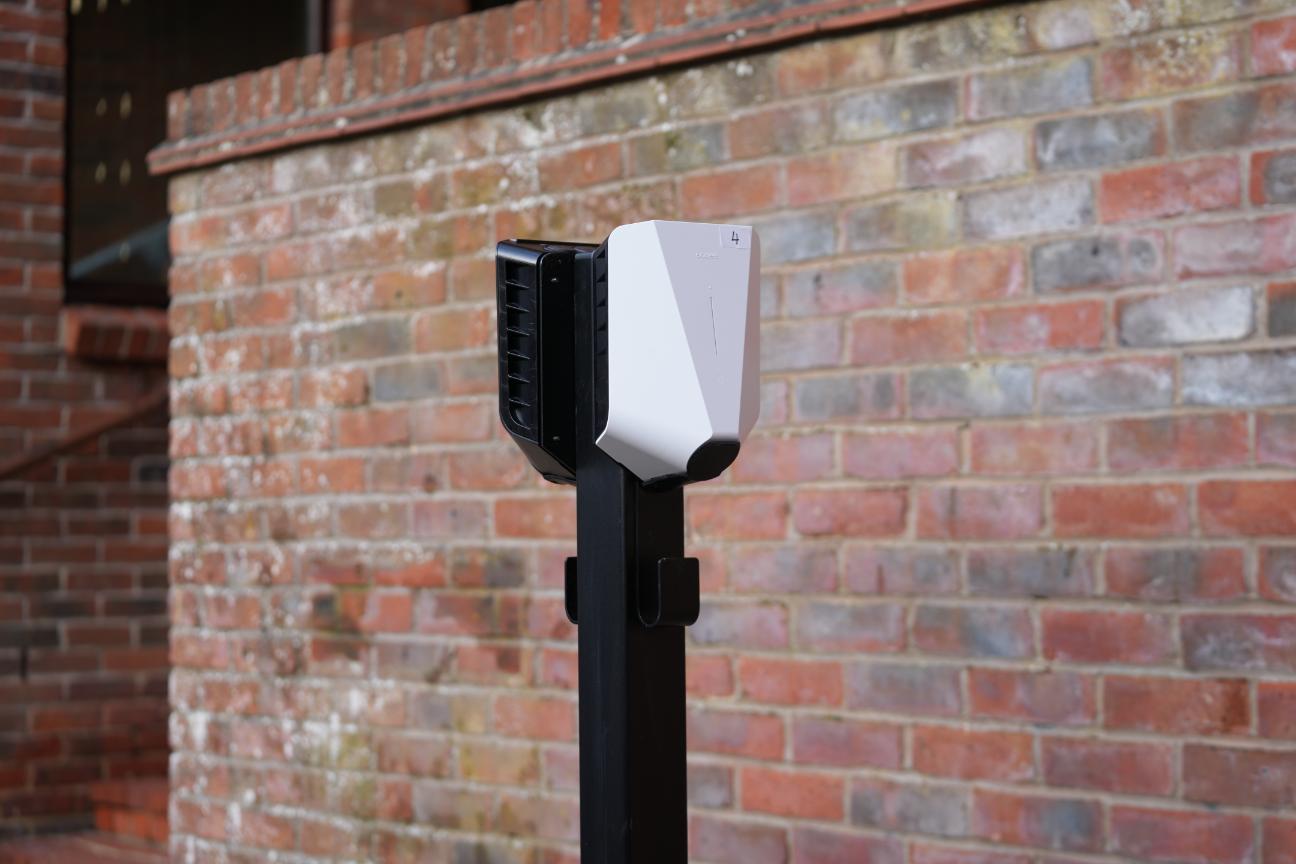
Easee One: Technical Specifications
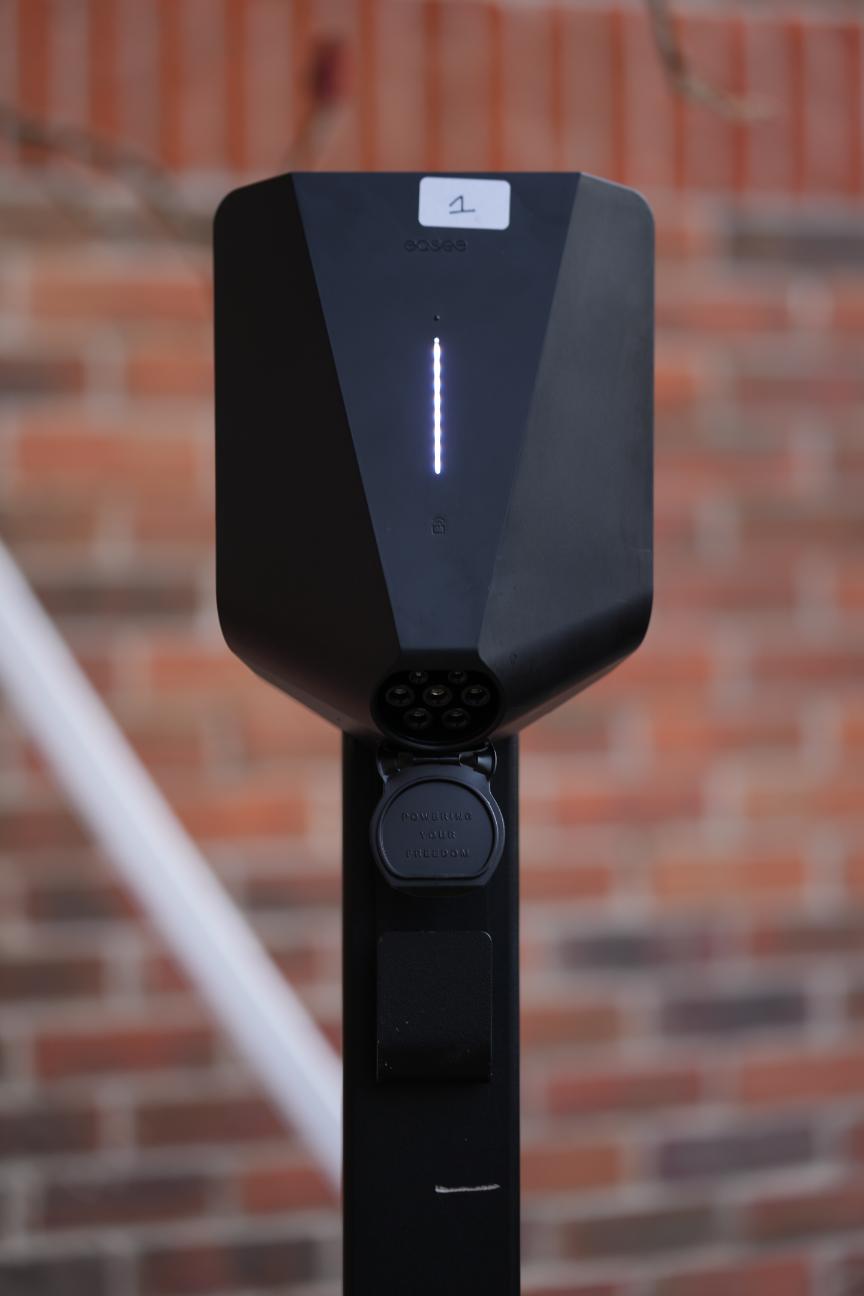
The chargers installed at Rainbow Productions were Easee One units, offering:
- 22kW charging capacity (single or 3-phase operation)
- Lightweight design (only 1.5kg, compared to bulky pedestal systems)
- Permanent cable lock for security—essential for commercial installations
- RFID technology allowing integration with workplace passes or dedicated charging keys
- Multiple colour options (black, white, grey, blue, red)—useful for visual differentiation like Rainbow Productions' red/blue and black/white colour scheme
- Tethered or untethered configuration—can permanently lock a Type 2 cable or accept cable-free operation
- IP54 protection rating—suitable for outdoor car parks and weather exposure
Comparison with Other Systems
Not all chargers support daisy chaining. For example, myenergi's zappi chargers specifically cannot be daisy-chained due to electrical load management and safety certification constraints. Each zappi requires a dedicated circuit.
The Easee architecture's design specifically enables daisy chaining, making it particularly cost-effective for multi-unit commercial deployments.
The ROI Perspective: When Commercial Charging Makes Financial Sense
Cost Justification
For businesses considering whether commercial charging is worthwhile, consider:
Staff Retention Value: Offering workplace charging is increasingly expected by EV-driving employees. The cost of replacing a single employee often exceeds the annual operating cost of maintaining a charger.
Brand and Marketing Value: Positioning your business as EV-ready and sustainability-focused carries intangible benefits—particularly for companies targeting younger demographics or ESG-conscious clients.
Public Charging Revenue: With Monta's dynamic pricing, a single public charger might generate £100-£200+ monthly in charging revenue (based on local usage patterns). Four chargers could generate £400-£800+ monthly.
Energy Management Savings: Load balancing prevents unnecessary grid upgrades that might otherwise cost £2,000-£5,000+. The intelligent power distribution also optimises electricity usage.
Accessibility and Inclusivity
Notably, commercial charging installations support the growing segment of EV drivers without home charging access—those in flats, terraced housing, or properties without off-street parking. Rainbow Productions' public chargers directly serve this underserved population.
Future-Proofing Your Property: Why Now Matters
The logic driving businesses like Rainbow Productions to install commercial chargers today is compelling:
Market Acceleration: EV registrations in the UK continue accelerating. In 2025, nearly 25% of new car sales were EVs—and this percentage only grows year-on-year.
Regulatory Requirements: From 2028, new regulatory frameworks will likely mandate charging infrastructure at certain commercial properties. Early adopters avoid potential future retrofit costs.
Employee Expectations: As EV adoption increases, staff expectations shift. Offering charging becomes competitive advantage rather than luxury.
Grid Infrastructure Improvements: With £200+ million in UK government charging infrastructure investment announced in 2025, local charging networks are expanding rapidly. Installing now means your facility becomes a recognised charging destination.
The Bottom Line: Commercial Charging as Strategic Infrastructure
The Rainbow Productions installation demonstrates that commercial EV charging isn't merely about accommodating electric vehicles—it's about strategic business infrastructure investment. By combining staff charging benefits, public revenue generation, intelligent load balancing technology, and professional payment systems, businesses can create self-sustaining charging ecosystems that generate value for employees, the public, and the bottom line.
The daisy-chaining technology enabled by modern chargers like Easee fundamentally changes the economics of multi-unit installations. Load balancing ensures safety while maximising efficiency. Integration with platforms like Monta transforms charging from operational expense into potential revenue stream.
For business owners and facility managers, the question isn't whether commercial charging infrastructure makes sense—it's whether your property can afford to remain without it as EV adoption accelerates.
At Plug In Stations, we've successfully installed over 5,000 EV charge points across the UK, including complex commercial multi-unit systems like the Rainbow Productions project. Our experience with Easee chargers, load balancing systems, and payment platform integration ensures your installation delivers maximum value—whether for staff convenience, public access, or revenue generation.
Whether you're installing your first charger or scaling to multiple units across commercial properties, our expert team handles every detail: site assessment, permit coordination, professional installation, testing, and long-term support.
Ready to future-proof your property with commercial EV charging? Get a free quote from Plug In Stations and discover how intelligent charging infrastructure can transform your business while supporting the EV transition.


